Unboxing tea aromas

Big excitement here when I received a box of aroma samples from Perfumer’s Apprentice:
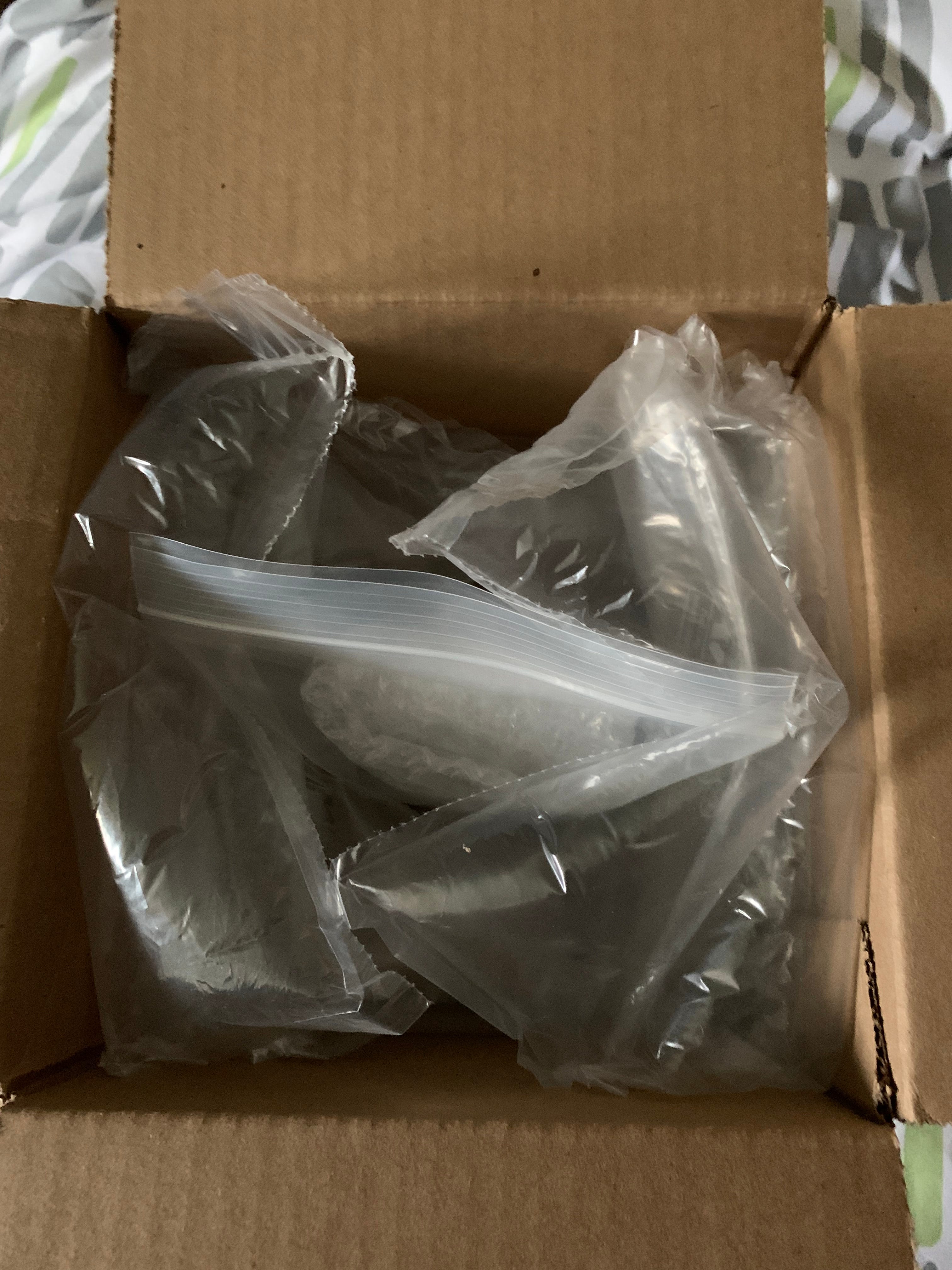
(You’ll notice how carefully the six tiny vials were packed. The aroma chemicals they contain don’t pose any toxicity, but oh the intensity of the smell if they were to be broken!)
One of the joys of tea is to sniff the leaves before you brew them and then sniff the tea you have prepared. The aromas of a tea can be, to put it mildly, enchanting,
A while back, in the last years BC (= Before COVID), Scott Svihula and I created a tea aroma kit called The Scents of Tea. It consisted of 45 vials of aroma chemicals corresponding to the chemicals found in tea, a guidebook to these aromas, individual cards for each aroma, and a fan displaying the aromas in the order at which they appear in the course of processing with a code indicating in which teas each aroma could be found. Here’s what the kit looked like:
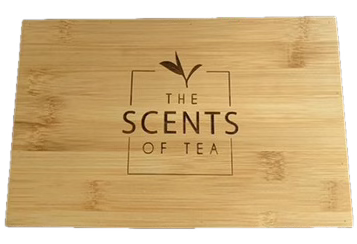
Scott had this elegant box made.
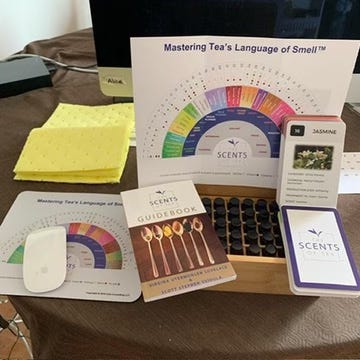
The yellow pads to the left were critical for keeping the vials from falling out of their spaces. Scott had a mousepad made, too.
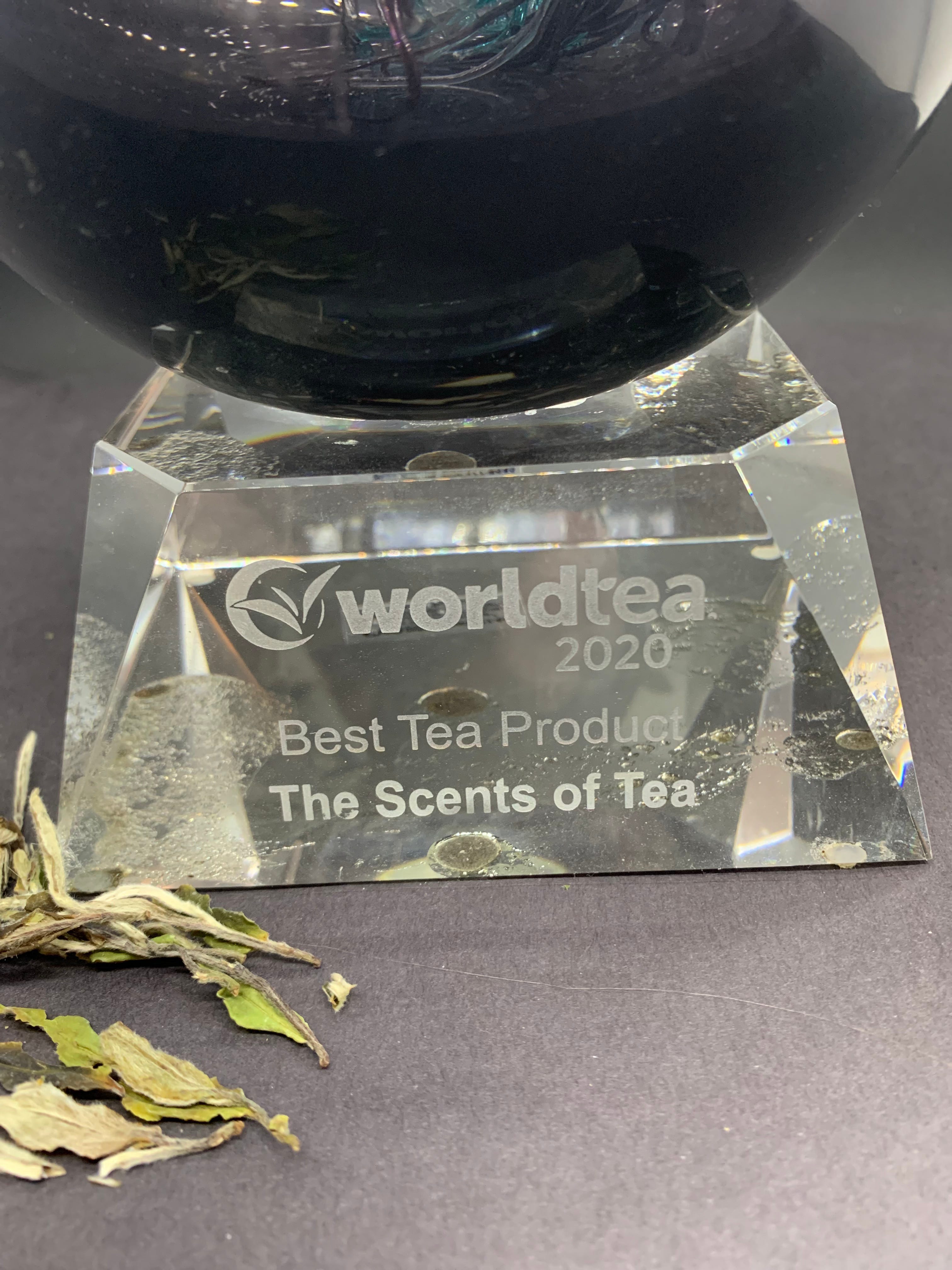
Very proud to say that the kit received “Best Tea Product” award at World Tea Expo 2020.
The kit quickly sold out. We haven’t reproduced it, in part because it took a lot of labor and Scott, who turned each kit into a reality, was on to other tea related activities; in part because our source of aroma chemicals was no longer carrying them; in part because the kit was way to expensive to create.
But my thoughts still turned to tea’s aromas. And wine’s. Here’s a photo of me and my friend Marzi Pecen getting ready to demonstrate some of the aroma parallels between teas and wines at a workshop we held at the Global Tea Initiative for the Study of Tea Culture Colloquium called “The Great Debate: Discussions on Tea & Wine” at the University of California at Davis.
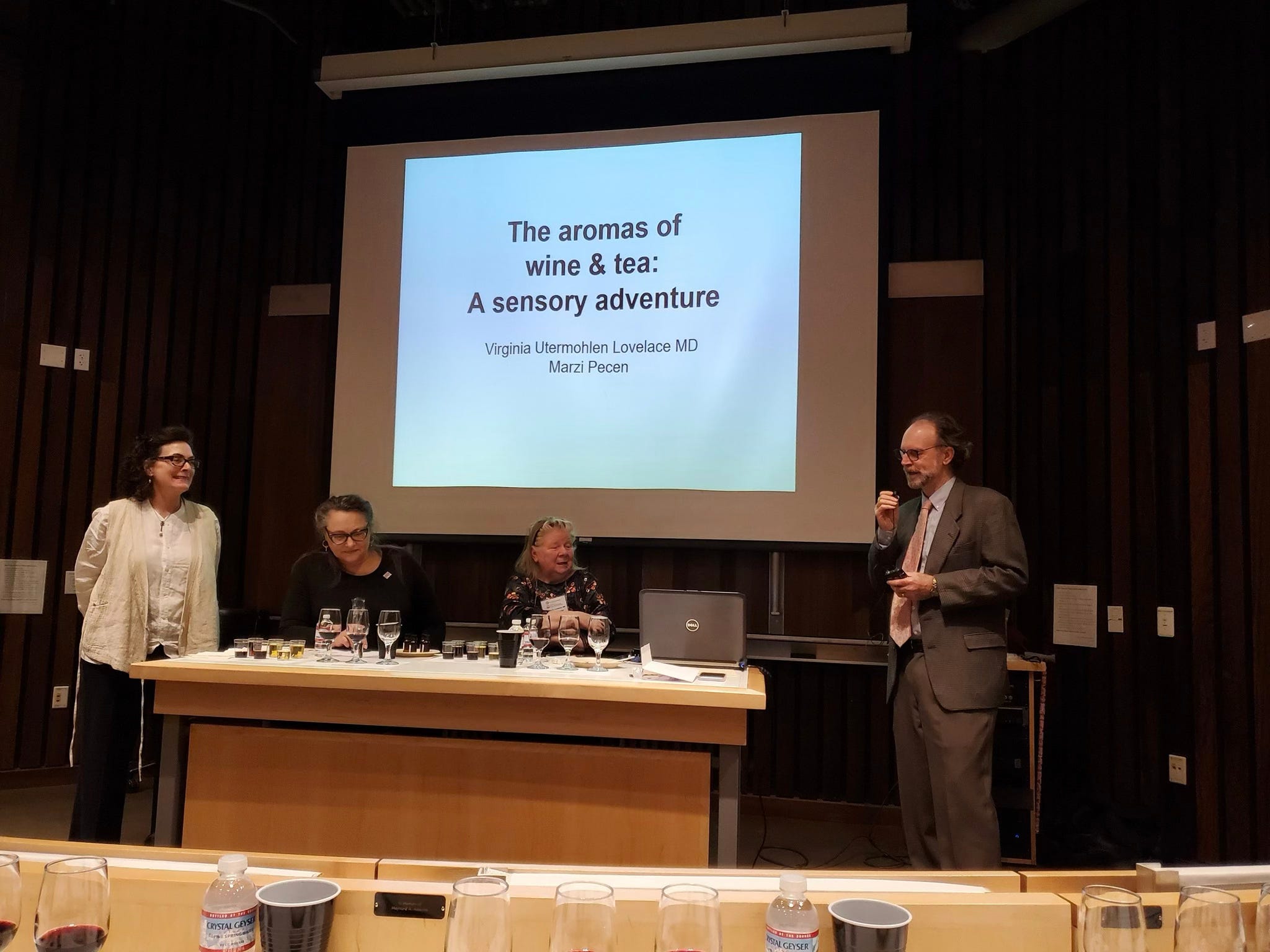
A workshop at the Global Tea Initiative in January 2020, where the participants experienced parallels in aromas and flavor among wines and teas. From left to right: Katharine Burnett, Founding Director, Global Tea Initiative for the Study of Tea Culture and Science; Marzi Pecen, Tea and Sensory Educator and Advocate; your truly; and Andrew L. Waterhouse Director of the Robert Mondavi Institute of Wine and Food Science and Professor, Department of Viticulture and Enology at University of California, Davis.
I’ll go into these parallels in detail in a future article and in a future book about dining with tea—they have a bearing on how you choose foods to pair with teas.
But for the time being I’m working on a book about the aromas of tea and the chemicals that create these aromas. This is why I have been buying aroma chemicals: I need to sniff them to know what I’m talking about.
This latest group consists of (left to right):
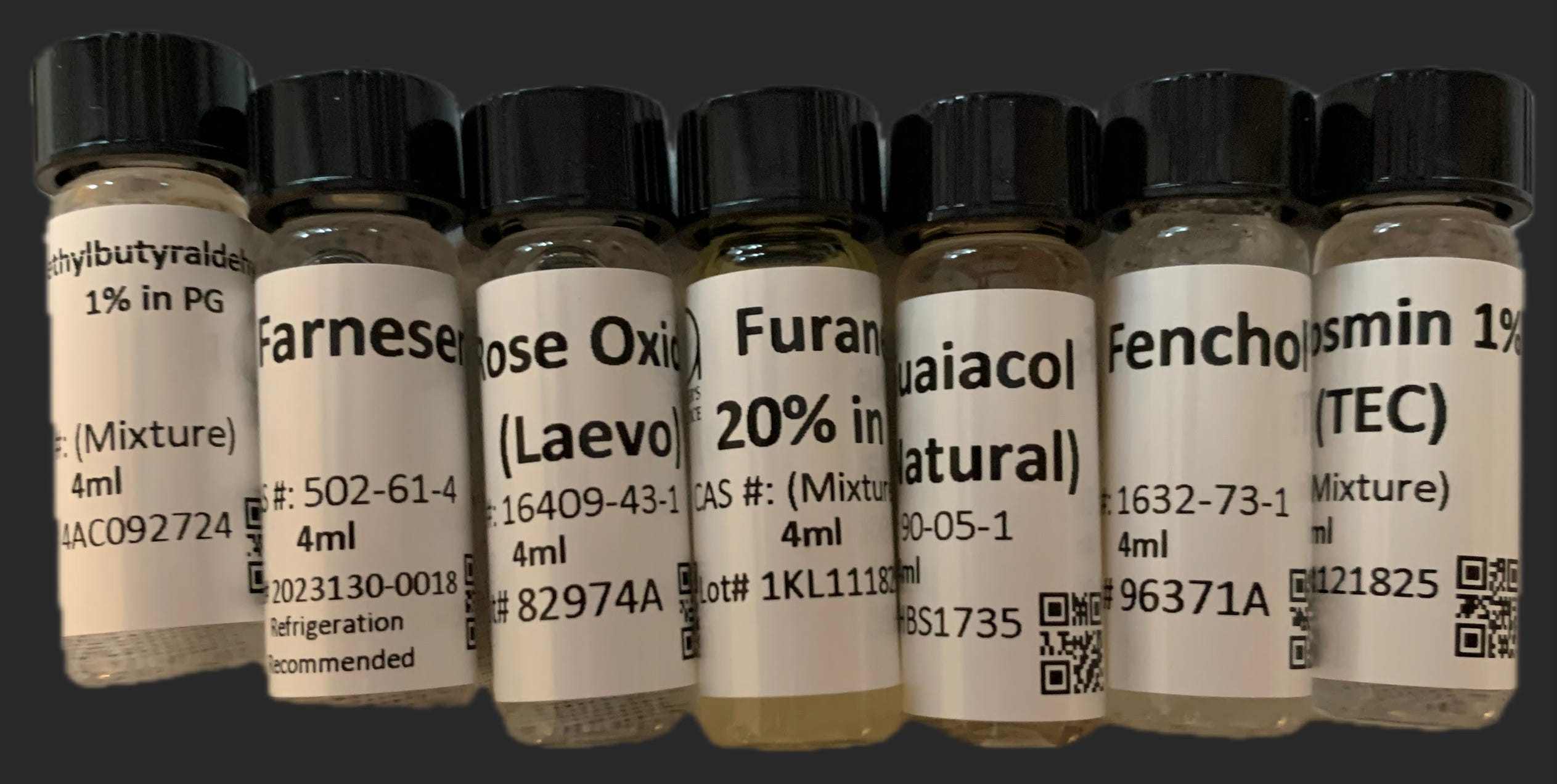
2-methylbuteraldehyde: one of the elements of Assam tea’s malty aroma and flavor, somewhat chocolatey, too;
Farnesene: this chemical is in oolongs and is the precursor of nerolidol, a chemical that is the marker of the highest quality Taiwanese oolongs such as Ali Shan.1 I adore the aroma of nerolidol, so I was wondering what its precursor smelled like. Here’s what has been said of nerolidol’s aroma:
As Mark Evans says (http://www.hermitageoilsaustralia.com/product/nerolidol-natural-isolate/ accessed May 30, 2026):
“It seems pleasantly green, citrus-like and waxy, yet the smell is so subtle that to me it seems to have more of a presence rather than a scent. You know something is there… yet the nose only senses this agreeable freshness, like an aura of light or like a cool breeze.”
Farnesene is even more ethereal and green than nerolidol, if that’s possible.
Rose oxide is one of the numerous rose chemicals in teas. Will do an article about them soon.
Furaneol® (yes, Firminich trademarked this chemical) is actually the main chemical that gives real strawberries their flavor. You’ll find it in oolongs, which is why oolongs go so well with strawberries.
Guaiacol is one of the chemicals found in smoke, so you will find it in teas that have been heated by pan-firing, such as Chinese green teas, as well as any tea that has been roasted, or in teas that have been smoked such as pine-smoked Lapsang Souchongs. One of the interesting facts about guaiacol is that not everyone can smell it, or if they do it is very faint. I got this sample to see if I could smell it. I can.
Fenchol and geosmin are two aromas in puer that are the result of microbial activity. While geosmin is the typical smell of petrichor, that fresh clean smell of the earth after the rain, I find that fenchol also offers an earthy but more medicinal quality. Sniffing them together, as I did just now as I wrote this, is overwhelming, which may explain why so far I dislike puers. Need to learn to appreciate puers, though, if not like them going forward. In fact, the odors of these two vials are lingering in my room far too long for my liking.
Thank you so much for reading this. So much still to come!
Incidentally, if you sniff nerolidol while tasting an oolong, as we did in a World Tea Expo workshop, the full panoply of the oolong’s floral qualities will unfold. It’s the high quantity of nerolidol in high quality oolongs that makes them so much more complex and rich.